

The Pangolin – Armoured, Elusive, and Essential
The Pangolin – Armoured, Elusive, and Essential
Beyond the Big Five
Written with insights from Edwin Young, Warden of Karongwe Private Game Reserve.
There are sightings that come with noise – lion roars rolling over grasslands, elephants cracking branches at the river’s edge. And then there are sightings that arrive in silence.
The pangolin belongs to the latter.
Small. Armoured. Ancient in appearance. Almost impossibly shy. To encounter one in the wild is to feel time slow and your heartbeat quicken. And yet, for all its secrecy, this small mammal plays a disproportionate role in the health of the land it walks.
Often called a “scaly anteater,” the pangolin is not a reptile at all, but a mammal – one of the most distinctive on earth. In South Africa, the species found within the greater Kruger region is the Temminck’s ground pangolin (Smutsia temminckii), the only pangolin species found in southern Africa.
According to conservation authorities working within the Kruger National Park landscape and supported by the African Pangolin Working Group, it is solitary, nocturnal, and highly specialised – feeding almost exclusively on ants and termites, which it detects with a powerful sense of smell and gathers using a remarkably long, sticky tongue.
It has no teeth. It doesn’t need them.
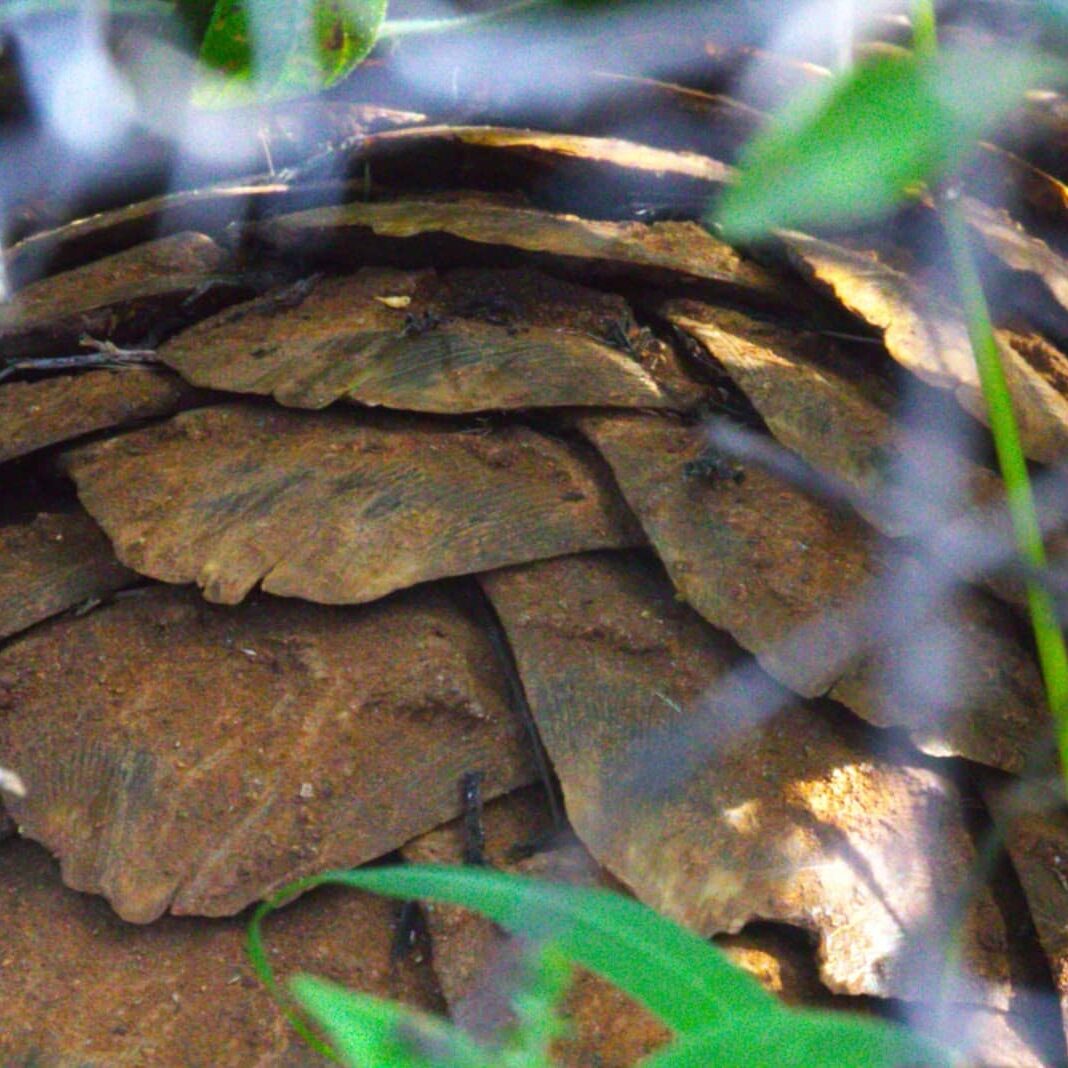
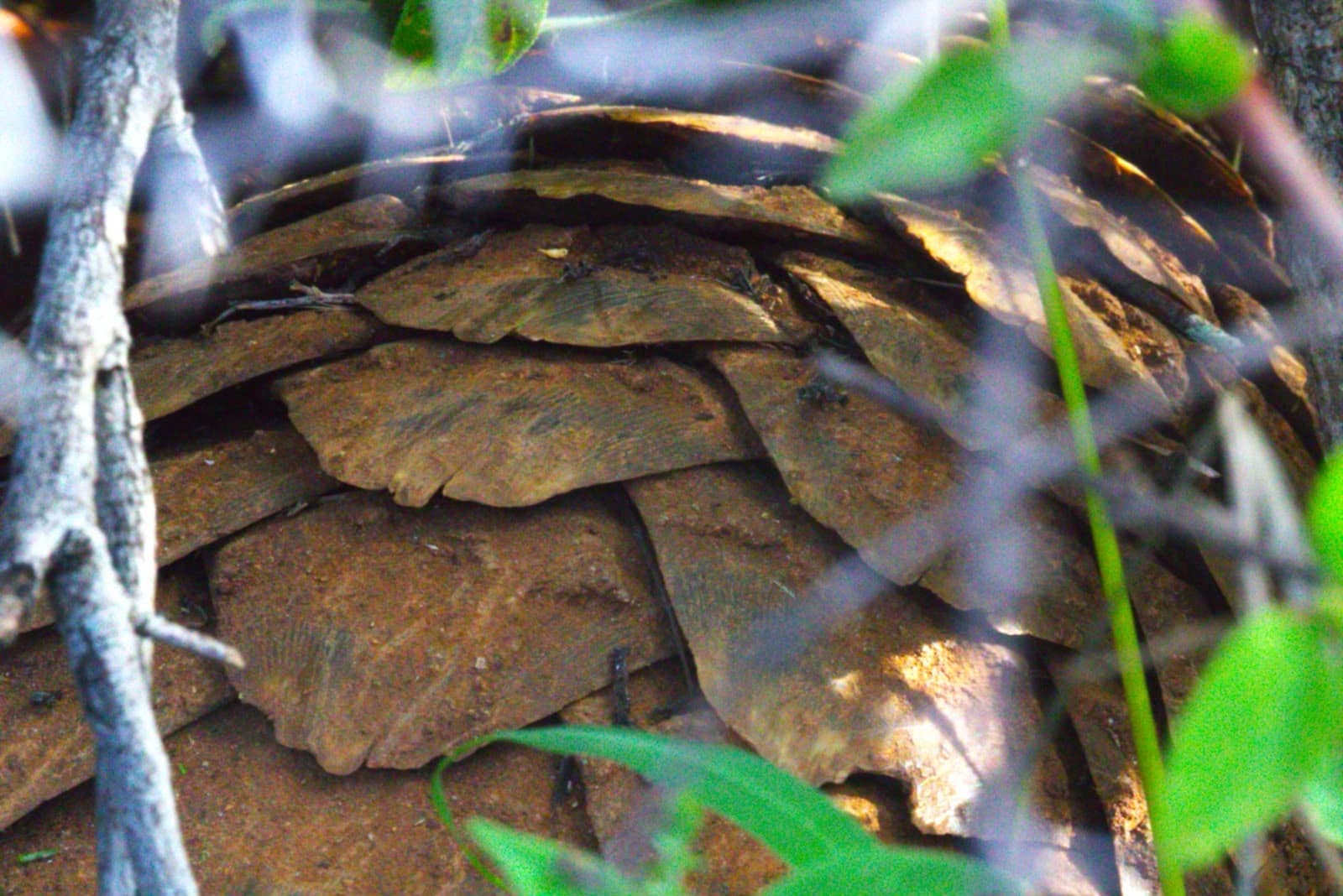
Instead, it carries armour. Overlapping keratin scales (the same material as human fingernails) form a protective coat across its back and tail. When threatened, it does not run. It rolls. Curling into a tight, near-impenetrable ball, protecting its soft underside with deliberate stillness – a behaviour well documented by field researchers across southern Africa. An ancient strategy – one refined over millions of years.
But today, pangolins are among the most threatened mammals on the planet. The IUCN Red List recognises all eight pangolin species as threatened, with illegal wildlife trafficking considered their greatest risk. Their scales and meat are highly sought after in some parts of the world, making them one of the most trafficked mammals globally.
Which makes every protected landscape – every intact biosphere – matter even more!
Within the Kruger-to-Canyons Biosphere, pangolins depend on healthy termite populations, undisturbed soils, and connected wilderness corridors. Their presence is not accidental; it reflects the condition of the land itself. Ecologists recognise them as important ecosystem engineers – turning over soil as they forage, aerating the earth, and influencing insect dynamics beneath our feet. A Temminck’s pangolin may consume tens of thousands of ants and termites in a single night, playing an essential role in regulating insect populations.
Where soils are degraded, where corridors are broken, where insect systems collapse – pangolins disappear first.
Karongwe guides describe the experience of seeing one simply: “You don’t just ‘tick’ a pangolin sighting. You absorb it. They move like something from another era – completely unaware of how extraordinary they are. When you see one, you realise how much of the wild still exists beyond the obvious.”
And perhaps that is the real gift of the pangolin. It reminds us that the bush is layered. That not all rarity announces itself. That some of the most remarkable lives unfold at ankle height, under cover of darkness, in the soft turning of soil.
At Karongwe, conservation is not measured only in headline species. It is measured in ecosystem integrity – in soils left undisturbed, in insect populations thriving, in corridors that allow even the most elusive mammals to persist.
The pangolin may never seek the spotlight. But its presence within this greater landscape is a quiet benchmark of what it means to restore and protect a biosphere properly.
Across southern Africa, conservation teams work tirelessly – restoring degraded habitat, securing wilderness corridors, and strengthening anti-poaching intelligence – because survival alone is not enough. Regeneration is what gives species like the pangolin a future.
At Karongwe, protection is not about spectacle. It’s about stewardship. Landscapes that allow even the shyest species to persist. Conservation that looks beyond the iconic and into the intricate.
Because safari isn’t only about what roars. Sometimes, it’s about what moves quietly through the night – leaving delicate claw marks in the sand, and a lasting imprint on those fortunate enough to witness it.
Find out more about what Regeneration means to us.
More Stories